Mental Health · Trauma
What happened
to you still
lives in your
body.
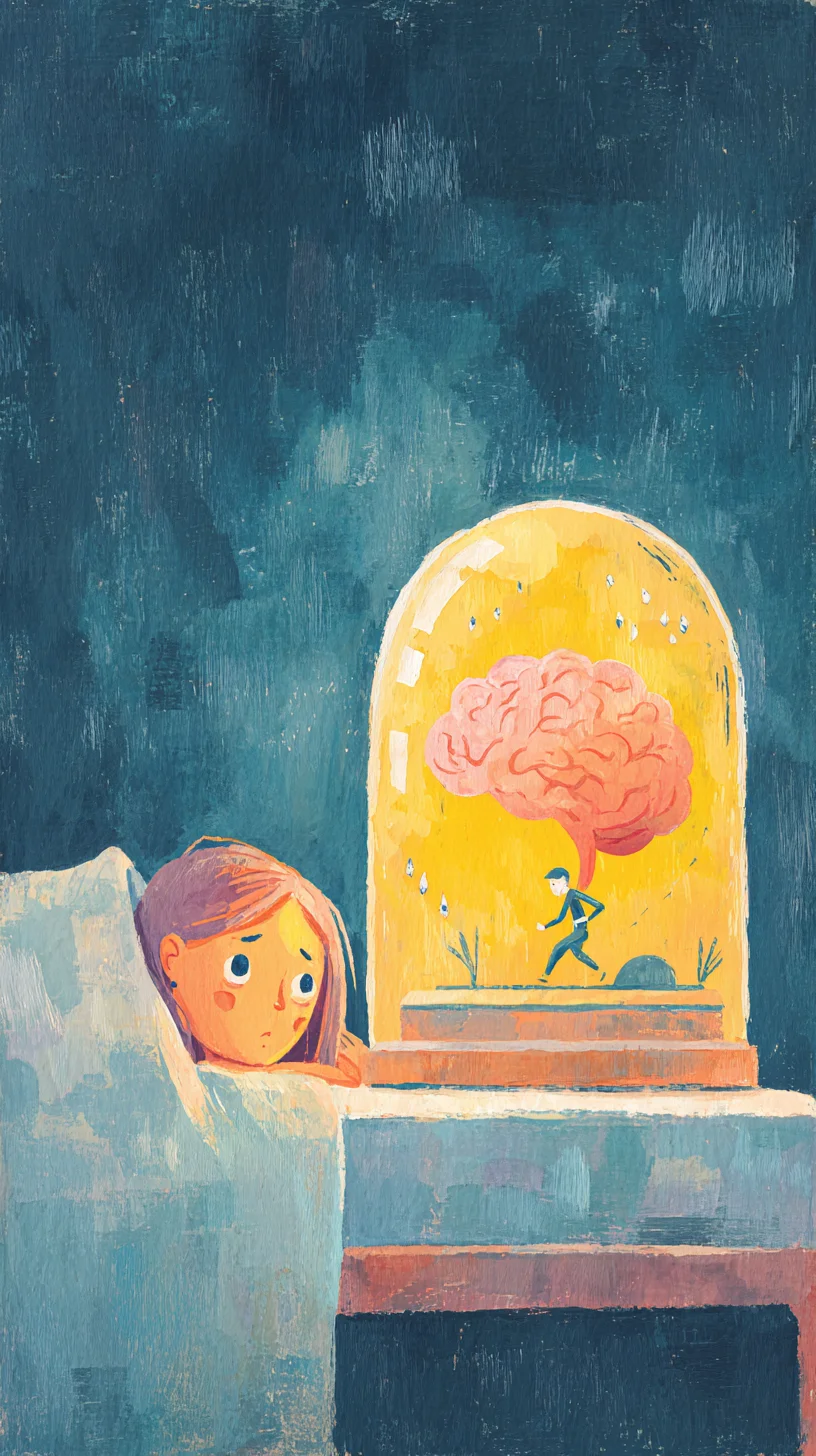
Trauma isn't always the dramatic event people picture. Sometimes it's the silence in a house that should have been warm. The parent who was there but never really present. The years of walking on eggshells. Whatever form it took — you deserved better. And the right therapy meets you where you are.
The Indian Context
young people in India report experiencing child maltreatment or family-level adversity — and almost none ever receive support (cVEDA study, n=9,010). The silence isn't just cultural. It's structural.
In a culture where 'what happens in the family stays in the family,' trauma is silenced generationally. Emotional neglect, authoritarian parenting, domestic violence, and sexual abuse are widespread but rarely named — because naming them means challenging the family structure.
"Ghar ki baat ghar mein rehni chahiye." This one sentence has kept generations silent. It protected the family's image at the cost of the child's safety. Therapy is where that silence finally breaks — not to blame, but to heal. On your terms. At your pace.
Understanding the Condition
Trauma isn't defined by the event. It's defined by the impact.
Two people can live through the same event and carry completely different weight afterwards. What makes something traumatic isn't a checklist — it's whether your mind and body could process it at the time. When they couldn't, the experience gets stored differently. Not as a memory. As a state.
Acute / Single-Event Trauma
A car accident. An assault. A sudden loss. A medical emergency. Acute trauma is a single overwhelming event that exceeds your nervous system's ability to cope.
The mind freezes the moment — sounds, smells, sensations — and stores it differently than regular memories. That's why trauma memories feel like they're happening now, not then.
Acute trauma is often the most 'recognised' form — but recognition doesn't mean treatment. Many people live with untreated single-event trauma for decades, managing through avoidance.
Complex / Developmental Trauma
This is the trauma nobody makes films about. No single event you can point to. Instead, years of growing up where love was unpredictable, emotions were punished, or safety depended on reading someone else's mood perfectly.
Complex trauma shapes who you become, not just how you feel. It affects your ability to trust, regulate emotions, maintain relationships, and know who you are.
It's the most underdiagnosed form of trauma in India — because it often occurs within families, and the culture protects the family unit above the individual experience.
Vicarious & Intergenerational Trauma
You can carry trauma that isn't 'yours.' Witnessing a parent's abuse. Growing up with a caregiver's untreated PTSD. Inheriting the anxiety of a family that survived partition, displacement, or systemic oppression.
Intergenerational trauma passes through behaviour, not just genetics. A parent who never processed their own trauma raises a child in a home shaped by fear, control, or emotional absence.
This is especially relevant in India, where partition trauma, caste-based violence, and gender-based oppression have been passed down silently for generations.
How It Shows Up
Trauma doesn't stay in the past. It lives in the present.
The brain stores trauma differently than regular memories. That's why it doesn't 'fade with time' — it stays active, influencing everything from relationships to physical health.
Hypervigilance disguised as anxiety
Always scanning for danger. Reading rooms before entering them. The body is stuck in survival mode — your nervous system never got the memo that the threat has passed.
EmotionalEmotional numbness as a default
Not sad, not happy — just flat. Dissociation protects you from feeling too much. But it also prevents you from feeling anything at all, including connection and joy.
EmotionalA startle response that's too sensitive
Jumping at loud sounds. Tensing when someone walks behind you. An overactive startle response is your nervous system running a threat detection program from an outdated era.
BodyChronic pain without medical explanation
Headaches, back pain, gut issues, autoimmune conditions. The body stores what the mind can't process. Unexplained physical symptoms are frequently trauma's calling card.
BodyPushing away the people who get close
Intimacy triggers vulnerability. Vulnerability was dangerous before. So you push away, self-sabotage, or pick fights — not because you don't want love, but because closeness activates an old alarm.
Fawning — saying yes to stay safe
People-pleasing as a trauma response. Becoming what others need to avoid conflict or danger. Not kindness — survival. The 'fawn' response is often missed because it looks like agreeableness.
Triggered by things that 'shouldn't' bother you
A tone of voice. A specific smell. A door closing too loudly. Triggers aren't rational because trauma isn't stored rationally. The sensory memory fires before the logical brain catches up.
PatternsDifficulty being present
Your body is here but your mind is somewhere else. Dissociation, zoning out, living on autopilot — these are protective mechanisms that once kept you safe and now keep you disconnected.
PatternsShame that runs deeper than guilt
Guilt says 'I did something bad.' Shame says 'I am bad.' Trauma-rooted shame isn't about behaviour — it's about identity. It tells you that what happened was your fault, or that you're fundamentally broken.
EmotionalThe Nervous System
Trauma isn't a memory problem. It's a nervous system problem.
Your nervous system learned to protect you. The problem isn't the protection — it's that it never turned off. Understanding this changes everything about the approach.
Fight: anger, control, rigidity
The nervous system chose confrontationWhen the threat response chose fight, it shows up as irritability, need for control, difficulty tolerating uncertainty, anger that feels disproportionate to the trigger. You're not 'angry' — your nervous system is still defending against a threat that passed.
Flight: anxiety, avoidance, busyness
The nervous system chose escapeFlight looks like chronic anxiety, workaholism, restlessness, inability to sit still. The mind is always running — not toward something, but away from something. Overworking and overthinking are often sophisticated flight responses.
Freeze: shutdown, dissociation, numbness
The nervous system chose stillnessWhen fight and flight aren't options, the system freezes. This shows up as emotional numbness, difficulty making decisions, feeling 'stuck,' brain fog, and dissociation. It's not laziness — it's a protective shutdown.
Fawn: people-pleasing, compliance, self-erasure
The nervous system chose appeasementFawning is the most recently recognised trauma response. It shows up as chronic people-pleasing, inability to say no, shaping yourself to fit what others need. You learned that safety came from being useful, not from being yourself.
Cycling between responses
No one response fits — you switch between themMost people don't have one fixed trauma response. You might freeze at work and fight at home. Fawn with authority figures and flee from intimacy. Understanding your patterns across contexts is key to therapeutic progress.
What Good Therapy Looks Like
Trauma therapy has to be safe before it can be effective
Going too fast retraumatises. Going too slow stagnates. The right therapist knows exactly how to pace the work — and that's a clinical skill, not an intuition.
EMDR
Eye Movement Desensitisation and Reprocessing helps the brain reprocess traumatic memories — moving them from 'happening now' to 'happened then.' It's one of the most researched trauma treatments globally.
EMDR doesn't require you to talk in detail about what happened. It works with the sensory memory directly, which makes it particularly effective for people who find verbal processing of trauma overwhelming.
Somatic Experiencing
Trauma lives in the body. SE helps you complete the survival responses that were interrupted during the traumatic event — the fight, flight, or freeze that never resolved.
By working with body sensations rather than narrative, SE helps discharge the stored energy of trauma gradually and safely. It's particularly effective for people who dissociate or feel 'stuck.'
Schema Therapy
For complex and developmental trauma, schema therapy addresses the deep beliefs formed during years of unsafe caregiving — 'I'm defective,' 'I can't trust anyone,' 'I have to do everything alone.'
Schema work rewrites these beliefs at the emotional level, not just the intellectual one. It's deep, slow work — but it changes the foundation, not just the surface.
Internal Family Systems
IFS helps you understand and work with the protective parts that developed in response to trauma — the hypervigilant part, the numbing part, the people-pleasing part.
Instead of fighting these parts, IFS builds a relationship with them. The goal isn't to eliminate the protectors — it's to help them trust that you're safe enough to try something different.
"My therapist never pushed me to talk about it before I was ready. That was the first time anyone respected my 'no' — and that respect is what made me eventually say 'yes.'"
Trauma therapy must be paced carefully. Too fast and you retraumatise. Too slow and you stay stuck. The right therapist reads your nervous system, not just your words.
Our therapists at Thought Pudding are trained across frameworks. They work at your pace, not theirs.
Severity and Approach
Trauma recovery looks different for everyone.
There's no standard timeline. Recovery depends on the type of trauma, its duration, your support system, and the quality of the therapeutic relationship.
Focused processing
A specific traumatic event that can be identified and processed. EMDR and SE are often highly effective. Recovery can be relatively contained — weeks to months with the right therapist.
Phased treatment
Years of trauma require phased work: stabilisation first, then processing, then integration. This takes longer but the results are life-changing. Safety must be established before processing begins.
Specialist care
When trauma results in significant dissociation or severe PTSD, specialist trauma therapy is essential. Combined with psychiatric support when needed. Recovery is absolutely possible.
There's no timeline you 'should' be on. Healing happens at the pace your nervous system can tolerate. A good therapist respects that — and works with it, not against it.
Getting Help
You don't need to relive it to heal from it
The biggest fear people have about trauma therapy: 'Will I have to talk about it?' The answer is: only when you're ready. And sometimes, not at all — because modern trauma therapy can work with the body and the nervous system, not just the story.
Modern trauma approaches work with the body, with the nervous system, with the patterns — not necessarily with the narrative.
You set the pace. You set the boundaries. You decide what gets shared and when. A good therapist doesn't need your whole story to help you heal. They need your trust — and they earn it, not demand it.
Signs it's time
The Thought Pudding Difference
We work at your pace. Every time.
Trauma therapy requires safety before it can be effective. Our therapists are trained specifically in trauma-informed approaches — which means they know when to lean in and when to hold back.
Safety before processing
We don't rush to the trauma. Before any processing work begins, we build the internal resources — the stability, grounding, and self-regulation capacity — that make deep work possible.
Trauma-informed clinical framework
EMDR, SE, schema therapy, IFS — we use what the clinical picture calls for. Your therapist is trained across modalities and adapts based on what your nervous system can tolerate.
Supervised care
Every therapist at Thought Pudding is supervised by a senior clinician. Complex trauma is carefully reviewed. Your approach is adapted as the work reveals more.
You're in control
You decide the pace. You decide what gets shared. You have the right to stop, slow down, or redirect at any point. That's not just a courtesy — it's a clinical requirement of good trauma therapy.
"What happened to you was not your fault. And healing from it is not something you have to earn. Let us walk alongside you — at whatever pace feels right."