Mental Health · Workplace
You're not
lazy.
Your system is
shutting down.
Burnout isn't about working too hard. It's about working without meaning, recovery, or agency for too long. It's a systemic collapse that no vacation can fix — but the right therapy can.
The Indian Context
of Indian professionals report experiencing burnout — one of the highest rates globally
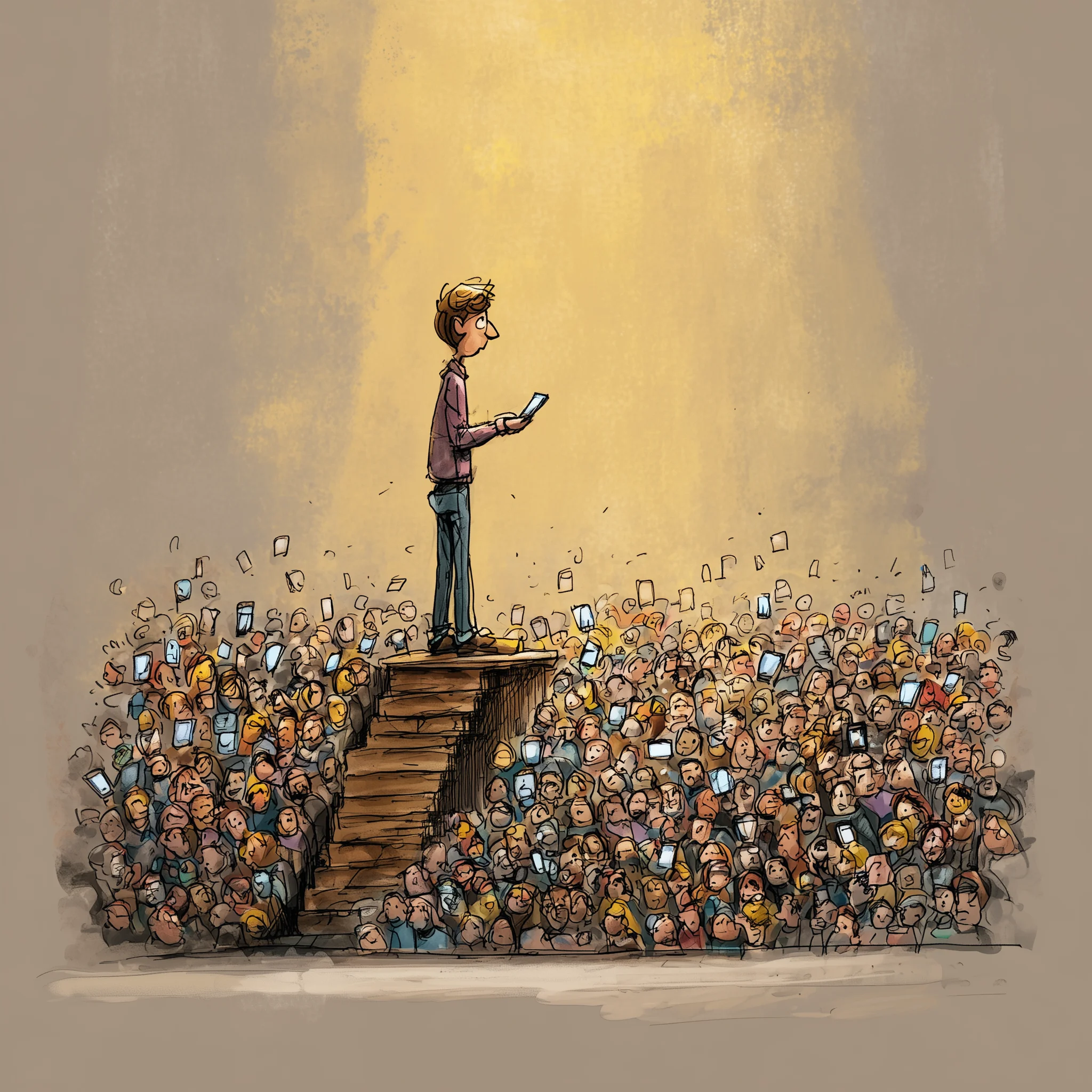
In a work culture that glorifies hustle and treats exhaustion as a badge of honour, burnout gets mistaken for dedication. By the time someone recognises it, the damage is often physical, emotional, and relational.
"Hustle culture kehti hai 'grind karo.' Nobody mentions what happens when there's nothing left to grind. Burnout isn't a phase — it's your body and mind refusing to go further without a reason to."
Understanding the Condition
Burnout isn't stress. It's what happens after stress wins.
The WHO classifies burnout as an occupational phenomenon with three distinct dimensions. Understanding which one dominates your experience changes the approach entirely.
Emotional & Physical Exhaustion
This is the dimension most people recognise — the bone-deep tiredness that sleep doesn't fix. But burnout exhaustion isn't just physical. It's emotional depletion: the inability to care, engage, or feel invested.
You're not tired because you worked hard. You're tired because you've been running without fuel. The recovery systems that normally replenish you — rest, weekends, vacations — have stopped working.
Physical symptoms are common: chronic headaches, digestive issues, weakened immunity, insomnia. The body is sending signals the mind has been ignoring.
Cynicism & Depersonalisation
This is the dimension that damages relationships. You start distancing from your work, your colleagues, your purpose. Everything becomes transactional. Sarcasm replaces engagement.
Cynicism isn't your personality changing — it's a defence mechanism. When you can't control the demands, you control your emotional investment by withdrawing it.
This is often misread as 'attitude problem' or 'not being a team player.' In reality, it's a symptom of a system that's been taking without giving back.
Reduced Professional Efficacy
The third dimension is the most insidious. Despite working as hard as ever — or harder — you feel like you're accomplishing nothing. Your confidence in your own competence erodes.
'I used to be good at this.' The gap between who you were and who you feel like now becomes a source of shame. You question your abilities, your career choice, your worth.
This dimension often triggers imposter syndrome, perfectionism spirals, and anxiety about being 'found out' — all of which accelerate the burnout cycle.
How It Shows Up
Burnout doesn't just affect your work. It seeps into everything.
The signs often start at work and slowly bleed into every other part of your life — health, relationships, identity.
The Sunday night dread that starts on Saturday
The weekend isn't restful because you're already bracing for Monday. The anticipatory anxiety bleeds backward until there's no real downtime left.
EmotionalNumbness where passion used to be
You remember caring deeply about this work. Now you feel nothing. Not angry, not sad — just empty. The absence of feeling is burnout's signature.
EmotionalA body keeping score
Tension headaches. Jaw clenching. Back pain. Gut issues. Insomnia. Your body is processing the stress your mind has normalised.
PhysicalGetting sick every time you rest
The moment you take leave, your body crashes. Colds, fevers, exhaustion. Your immune system has been running on cortisol — and when it stops, everything catches up.
PhysicalShort fuse at home
You've spent all day performing patience for colleagues. By the time you're with the people you love, there's nothing left. They get the worst version of you.
Withdrawing from people who energise you
Friends invite you out. You cancel. Not because you don't want to go — but because social interaction now costs energy you don't have.
Decision fatigue on simple things
Choosing what to eat for lunch feels overwhelming. Email replies take 20 minutes. Your decision-making capacity has been depleted by a thousand micro-decisions at work.
WorkProductivity without output
You're busy all day but can't point to what you accomplished. Meetings, emails, tasks — motion without progress. The hamster wheel spins faster but goes nowhere.
WorkGuilt about not being grateful
'I have a good job. I should be thankful.' Burnout weaponises privilege against you. The guilt about feeling burned out becomes its own burden.
EmotionalThe Burnout Cycle
How burnout deepens if left unaddressed
Burnout doesn't plateau. Without intervention, it escalates through stages — each one harder to reverse than the last.
The honeymoon fades
Enthusiasm becomes obligationYou started with energy, ideas, and genuine investment. Gradually, the demands outpace the rewards. What used to feel meaningful now feels like a transaction. You don't notice it immediately — it's a slow dimming, not a switch.
Stress becomes chronic
The recovery window disappearsOccasional stress is manageable. Chronic stress without adequate recovery is not. Your nervous system shifts from 'sometimes activated' to 'always on.' Sleep quality drops. Irritability rises. You start 'powering through' as a default mode.
The wall
Performance drops despite more effortYou're working harder than ever but producing less. Concentration wavers. Mistakes increase. The gap between effort and output widens, and shame fills the space. This is where many people double down — which accelerates the collapse.
Emotional withdrawal
You stop caring as a survival strategyCynicism isn't a choice — it's a defence. When you can't control the demands, you control your emotional investment. You detach from work, then from colleagues, then from the parts of your identity tied to your career.
Full burnout
Physical and emotional collapseThis is where burnout becomes indistinguishable from depression. Exhaustion is total. Motivation is gone. Identity feels fractured. Many people reach this point before seeking help — but recovery is possible from any stage.
Immediate Steps
Things that help right now — while you do the deeper work
These are stabilisation tools, not solutions. Use them as you work with a therapist on the root causes.
The micro-recovery
5 minutes between meetings. A walk around the block. Lunch away from the desk. Burnout recovery starts with reclaiming small pockets of non-productivity throughout the day.
Name one boundary
Not ten. One. 'I don't check email after 8 PM.' Start with the easiest one and protect it ruthlessly. Boundaries are muscles — they need to be built, not declared.
Audit your energy, not your time
Track what gives you energy and what drains it for a week. The answer is rarely about hours — it's about the type of work and who you're doing it with.
Tell one person the truth
Not 'I'm fine.' The actual truth. Burnout thrives on performance. One honest conversation can break the isolation that makes everything heavier.
Separate identity from role
Practice saying 'I work as a [title]' instead of 'I am a [title].' The distinction is small but powerful. You are not your job — even if it doesn't feel that way yet.
If you've tried all of this and you're still here
Self-help for burnout has limits. If the pattern keeps repeating — different job, same exhaustion — the issue isn't the job. It's the pattern. That's what therapy changes.
What Good Therapy Looks Like
Burnout responds to therapy. Not just rest.
The most effective burnout therapy doesn't just address symptoms — it changes the patterns that made you vulnerable in the first place.
ACT
Acceptance and Commitment Therapy helps you reconnect with your values — what actually matters to you, not what you've been performing. When work and values are misaligned, ACT makes that visible.
ACT is particularly effective for burnout because it doesn't require you to change your thoughts. It helps you change your relationship with them — and take action based on what you value, not what you fear.
CBT
CBT targets the cognitive patterns that fuel burnout — perfectionism, catastrophising, black-and-white thinking about success and failure.
'If I say no, they'll think I'm incompetent.' 'If I rest, I'll fall behind.' CBT identifies these automatic thoughts and restructures them into something sustainable.
Schema Therapy
When burnout is a pattern — not just this job, but every job — schema therapy traces it to its roots. The belief that your worth equals your output often starts in childhood.
'I have to earn my place.' 'Rest is laziness.' These schemas were formed early. Schema work updates them so you can build a career that doesn't require self-destruction.
Somatic Approaches
Burnout lives in the body as much as the mind. Chronic tension, shallow breathing, nervous system dysregulation — these don't resolve through talking alone.
Somatic approaches help you recognise and release the physical patterns of stress, rebuilding your body's capacity to rest, recover, and respond proportionally.
"My therapist didn't give me a morning routine. She helped me understand why I felt I needed to earn the right to exist."
Burnout therapy isn't about optimising your schedule. It's about understanding why you're running yourself into the ground — and what would need to change for you to stop.
Our therapists at Thought Pudding are trained across frameworks. They assess what you need and adapt as the work deepens.
Severity
Burnout exists on a spectrum. All of it is valid.
You don't need to be in crisis to deserve support. Early intervention is always more effective than damage control.
Coaching + awareness
Feeling drained but still functioning. Occasional cynicism. Recovery on weekends still works, but barely. This is the best time to intervene — before the pattern hardens.
Structured therapy
Daily functioning is impaired. Physical symptoms present. Relationships affected. Recovery no longer happens naturally. Therapy is strongly recommended at this stage.
Clinical intervention
Indistinguishable from depression. Complete emotional and physical depletion. May require combined therapy and medical support. Recovery is still possible — but takes longer.
You don't need to hit rock bottom to deserve support. In fact, the earlier you act, the faster the recovery. Burnout caught early is far easier to treat than burnout that's been years in the making.
Getting Help
You don't need to quit your job to start healing
Burnout recovery doesn't always require a dramatic change — a new job, a sabbatical, a complete life overhaul. Sometimes the most important change is internal: understanding why you burned out, and what needs to shift.
Therapy gives you that understanding — and the tools to implement change without blowing up your life.
If any of this page felt uncomfortably familiar, that's your signal. Not a weakness. A starting point.
Signs it's time
The Thought Pudding Difference
We don't prescribe productivity hacks
Burnout isn't a time management problem. It's a human system under structural strain. Our approach addresses the conditions that created the burnout, not just the symptoms it produces.
Understanding why, not just how
We start by understanding the full context of your burnout — the work environment, the relational dynamics, the personal patterns, and what was there before the job.
Matching the modality to you
ACT, CBT, schema work, somatic approaches — we use what the clinical picture calls for. Your therapist adapts as the work evolves, not locked into a single framework.
Two layers of clinical oversight
Every therapist at Thought Pudding is supervised by a senior clinician. Your case is reviewed regularly. Course corrections happen proactively.
Sustainable change, not symptom management
We don't aim to get you back to the level of functioning that caused the burnout. We aim higher than that — for a version of work and life that doesn't require self-destruction.
"You've spent long enough running on empty. Let's figure out together what would actually fill the tank — and build from there."